
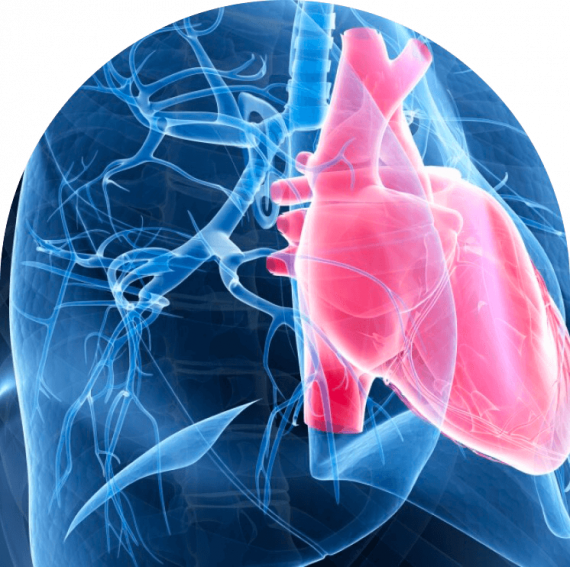
Pulmonary arterial hypertension (PAH) is a rare and serious form of high blood pressure that affects the arteries in the lungs. In PAH, the small blood vessels of the lungs become narrowed, blocked, or destroyed – forcing the right side of the heart to work harder to pump blood through the lungs. Over time, this strain causes the right ventricle to weaken and can lead to right heart failure if left untreated.
PAH is distinct from the more common forms of pulmonary hypertension (PH) in that it specifically involves the pulmonary arteries in the absence of other causes such as left heart disease or lung disease.
It is a chronic, progressive condition, but with modern targeted therapies many people with PAH are able to maintain quality of life and functional capacity.
How common is Pulmonary Arterial Hypertension?
PAH is a rare condition, with an estimated prevalence of 15–50 cases per million people. In Australia, it is estimated that around 5,000–10,000 people are living with pulmonary hypertension of various types, with PAH representing a proportion of these.
Women are diagnosed with PAH more often than men, at a ratio of approximately 2–3:1. The condition is most commonly diagnosed between the ages of 30 and 60, though it can occur at any age.
Symptoms of PAH often develop gradually and can be mistaken for other conditions, contributing to delayed diagnosis.
Symptoms include:
-
- Breathlessness, initially on exertion and later at rest
- Fatigue and reduced exercise tolerance
- Dizziness or lightheadedness
- Chest pain or pressure
- Fainting (syncope) or near-fainting
- Swelling of the legs, ankles, or abdomen (oedema)
- Dry cough
- Raynaud's phenomenon – fingers or toes that turn white or blue in response to cold
- Irregular or racing heartbeat in more advanced disease
Symptoms tend to worsen as the disease progresses.
PAH should be considered in anyone with unexplained breathlessness, particularly if other cardiac and respiratory causes have been excluded.
PAH can be idiopathic (no identifiable cause) – the most common form – or associated with other conditions:
-
- Idiopathic PAH – no underlying cause identified; most common
- Heritable PAH – caused by genetic mutations, most commonly in the BMPR2 gene; a family history of PAH increases risk
- Associated with connective tissue disease – particularly systemic sclerosis (scleroderma), but also lupus, rheumatoid arthritis, and mixed connective tissue disease
- Associated with congenital heart disease – certain heart defects present from birth can cause PAH over time
- Associated with HIV infection
- Associated with portal hypertension – high blood pressure in the portal vein (liver-related)
- Drug and toxin-induced – certain appetite suppressants and illicit drugs have been linked to PAH
PAH is challenging to diagnose because its early symptoms – breathlessness, fatigue, and dizziness – are common to many conditions.
The diagnostic process involves multiple steps:
-
- Echocardiogram – a non-invasive ultrasound of the heart; the usual first investigation, used to estimate pulmonary pressures and assess right heart function
- Blood tests and urine tests – to assess heart strain (BNP/NT-proBNP), organ function, and screen for associated conditions such as connective tissue disease or HIV
- Pulmonary function tests and CT chest – to assess lung structure and rule out underlying lung disease as a cause
- Ventilation-perfusion (V/Q) scan – to exclude chronic thromboembolic disease
- Right heart catheterisation – the definitive diagnostic test; a catheter is inserted into the right side of the heart to directly measure pulmonary artery pressures. This is required to confirm a PAH diagnosis and is performed by a specialist
Referral to a cardiologist or respiratory physician with expertise in pulmonary hypertension is recommended for all suspected cases.
There is no cure for PAH, but targeted therapies can significantly reduce symptoms, improve exercise capacity, and slow disease progression.
Treatment is managed by a specialist and involves:
Supportive measures
-
- Supplemental oxygen for patients with low blood oxygen levels
- Diuretics to manage fluid retention and oedema
- Anticoagulation in selected patients
- Supervised exercise rehabilitation
Targeted therapies
PAH-specific medications work by dilating the pulmonary blood vessels and reducing the workload on the right heart. Three main pathways are targeted:
-
- Endothelin receptor antagonists (ERAs) – block the action of endothelin, a potent vasoconstrictor; examples include bosentan (Tracleer), macitentan (Opsumit), and ambrisentan (Volibris)
- PDE5 inhibitors – promote vasodilation through the nitric oxide pathway; examples include sildenafil (Revatio) and tadalafil (Adcirca)
- Prostacyclin pathway agents – mimic or stimulate prostacyclin, a natural vasodilator; examples include selexipag (Uptravi), iloprost (Ventavis, inhaled), and epoprostenol (Veletri, intravenous)
- Soluble guanylate cyclase (sGC) stimulator – riociguat (Adempas) works via the nitric oxide-sGC pathway and is also used in chronic thromboembolic pulmonary hypertension (CTEPH)
Combination therapy using agents from multiple pathways is increasingly used in moderate-to-severe PAH.
In end-stage disease, lung transplantation may be considered.
The following specialty medications may be available at Ace, a specialty pharmacy for Pulmonary Arterial Hypertension.
Note: Epoprostenol (Veletri) and treprostinil (Remodulin) are intravenous/subcutaneous prostacyclin therapies used in severe PAH – confirm with a pharmacist whether Ace dispenses these, as they are typically managed in specialist centres.
With Ace, you’ll benefit from:
-
- Expert Support — Our dedicated team of health concierges is always available to answer your questions, provide guidance, and help you navigate your condition with confidence.
- Specialty Medication — We offer a wide range of specialty medications and support services, designed specifically for those living with chronic illnesses. Whether you’re looking for help managing a specific condition, or simply need access to the medications you need, we’ve got you covered.
- A Wide Range of Conditions — From diabetes to heart disease, and everything in between, we help manage a variety of special condition
Take control of your health and well-being, and start your journey to better health with Ace today.
PAH-Specific Support
-
- PAH Australia – peer support and information for Australians living with pulmonary arterial hypertension
- Pulmonary Hypertension Association of Australia (PHAA)
Clinical & Research Resources