
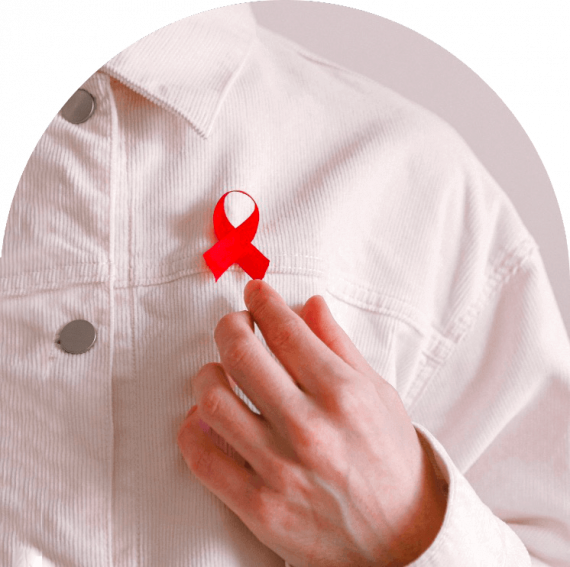
Human immunodeficiency virus (HIV) is the virus that causes HIV infection. HIV affects the immune system by attacking and destroying CD4 cells. The CD4 cells are part of your immune system that help in fighting infections. Without CD4 cells, it is hard for your body to fight serious infections and certain cancers, making those infected more susceptible to getting sick.
If left untreated, HIV can destroy the immune system and can lead to Acquired Immunodeficiency Syndrome (AIDS), which is the most advanced stage of HIV infection.
How common is HIV?
Around 30,000 people are living with HIV in Australia. There were 757 new diagnoses in 2024 — a 27% decline since 2015, continuing a long-term downward trend driven by testing, treatment, and PrEP.
Male-to-male sex remains the most common route of transmission, accounting for 62% of new diagnoses in 2024, followed by heterosexual contact and, less commonly, injecting drug use.
Australia is among the countries closest to reaching the UNAIDS 95-95-95 targets: as of 2024, an estimated 92% of people living with HIV had been diagnosed, 97% of those were on antiretroviral therapy, and 98% of those on treatment had an undetectable viral load. This is the basis of U=U (Undetectable = Untransmittable) — a person with an undetectable viral load cannot transmit HIV through sex.
At about 2-4 weeks after infection with HIV, the virus multiplies rapidly and some people develop flu-like symptoms, such as fever, headache, and rash. After this stage, the virus continues to multiply, but at very low levels. People may not have any symptoms at this point. It can take several years before signs of severe infection and opportunistic infections* develop.
Without treatment, HIV advances to AIDS in about 10 years (can be more or less in some people). At this point, the immune system is typically severely damaged. HIV transmission can occur at any stage after infection, even if the person has no symptoms.
*Opportunistic infections are infections that occur more frequently and are more severe in people with weakened immune systems, including people with HIV.
HIV is mainly spread by:
-
- Anal or vaginal sex with an HIV infected person without using a condom or taking medications to prevent or treat HIV
- Sharing injection drug equipment, such as needles, with an HIV infected person
- Mother-to-child transmission can occur from a woman with HIV to her child during pregnancy, childbirth, or breastfeeding
-
- Shaking hands or hugging a person who has HIV
- Sharing objects such as dishes, toilet seats, or doorknobs used by a person with HIV
- HIV is not spread through the air or in water or by mosquitoes, ticks, or other blood-sucking insects
The only way to know your HIV status is to get tested. In Australia, HIV testing is guided by individual risk rather than offered as a routine universal screen. Testing is available through GPs, sexual health clinics, community testing services, and self-collection (home) test kits.
Testing is recommended for anyone who may have been exposed to HIV. More frequent, regular testing is advised for people at higher ongoing risk — including sexually active gay and bisexual men, people whose partner is living with HIV, and people who inject drugs — with the recommended interval depending on level of risk.
If you are unsure whether or how often you should be tested, your GP or a sexual health clinic can help you assess your risk and advise you.
There is no cure for HIV, but effective treatment allows people living with HIV to stay healthy and live long lives. HIV medicines are called antiretrovirals, and treatment usually involves a combination of them — often combined into a single daily pill, making it far more manageable than in earlier years.
Taking medication consistently is essential. Skipping or stopping doses can allow the virus to develop resistance, which can stop the medicines working.
Preventing HIV: PrEP and PEP
Pre-Exposure Prophylaxis (PrEP) is medication taken by HIV-negative people to prevent infection. Oral PrEP (tenofovir/emtricitabine) is subsidised on the PBS for eligible individuals in Australia.
A long-acting injectable form (cabotegravir, brand name Apretude) has been approved by the TGA but is not yet PBS-subsidised — as of 2025 it is available only through a limited compassionate access program for people who cannot take daily oral PrEP.
Speak with your GP or a sexual health clinic about whether PrEP is right for you.
Post-Exposure Prophylaxis (PEP) is an emergency course of medication taken to prevent infection after a potential HIV exposure. It must be started as soon as possible, and within 72 hours, and is available through hospital emergency departments and sexual health clinics.
The following specialty medications may be available at Ace, a specialty pharmacy for HIV.
NRTI = nucleoside reverse transcriptase inhibitor; NNRTI = non-nucleoside reverse transcriptase inhibitor; PI = protease inhibitor; INSTI = integrase strand transfer inhibitor
Please contact Ace Pharmacy if you have questions or concerns about these medications.
With Ace, you’ll benefit from:
-
- Expert Support — Our dedicated team of health concierges is always available to answer your questions, provide guidance, and help you navigate your condition with confidence.
- Specialty Medication — We offer a wide range of specialty medications and support services, designed specifically for those living with chronic illnesses. Whether you’re looking for help managing a specific condition, or simply need access to the medications you need, we’ve got you covered.
- A Wide Range of Conditions — From diabetes to heart disease, and everything in between, we help manage a variety of special condition
Take control of your health and well-being, and start your journey to better health with Ace today.
There are many organisations that support research and advocacy for people living with HIV in Australia.
See below for a selection of support organisations.
Support Organisations
-
- ACON
- Positive Life NSW
- Meridian
- Australian Federation of AIDS Organisations (AFAO)
- Queensland Positive People (QPP)
- Queensland AIDS Council
- National Association for People Living with HIV Australia (NAPWHA)
- Northern Territory AIDS and Hepatitis C Council
- Tasmanian Council on AIDS, Hepatitis & Related Diseases
- Victorian AIDS Council / Thorne Harbour Health
- Living Positive Victoria
- WA AIDS Council
- Positive Life SA
- SAMESH (SA Mobilisation + Empowerment for Sexual Health)
Clinical & Research Resources